Redesigning the onboarding flow to reduce user drop-offs - Klakpad Sella
Project Overview
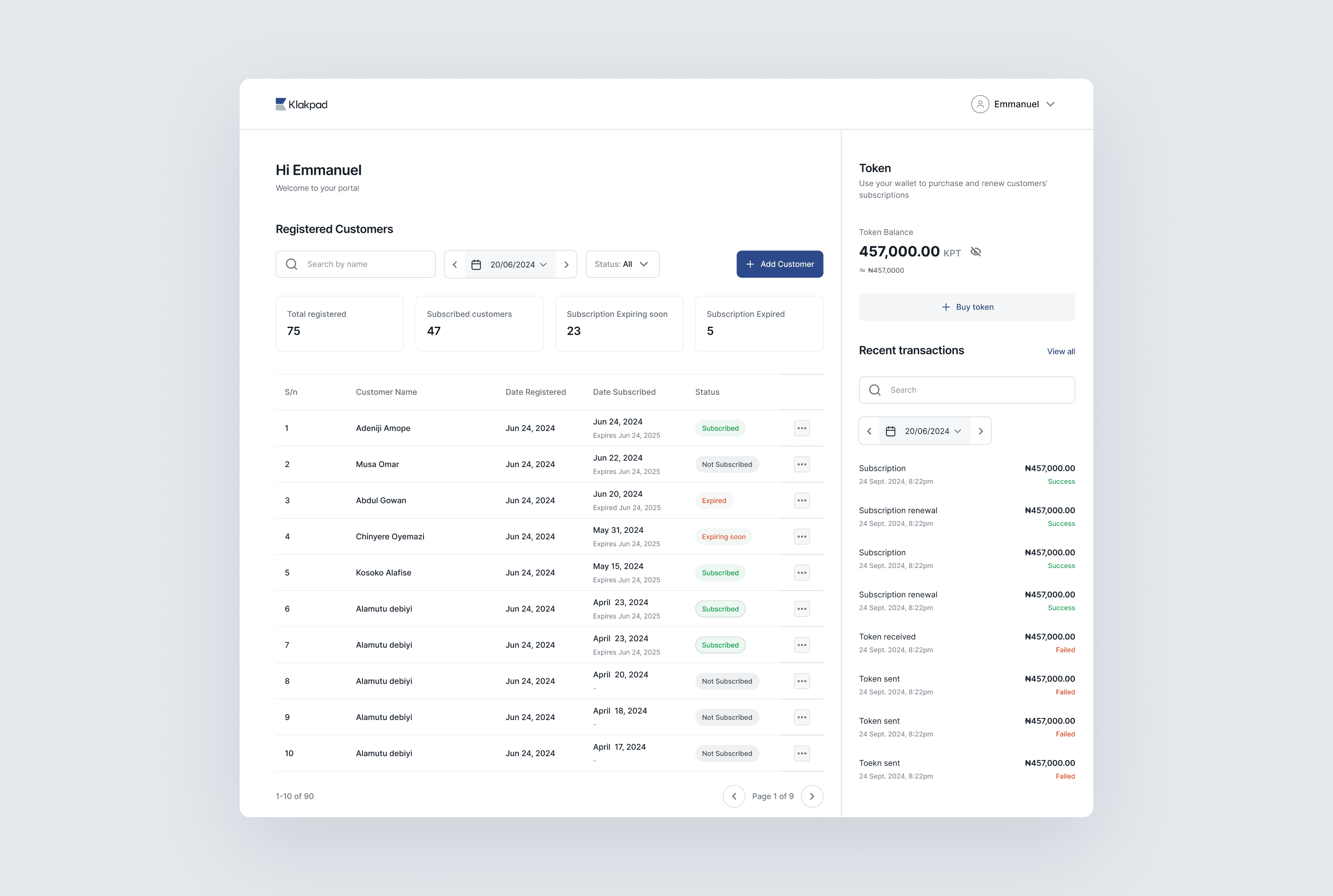
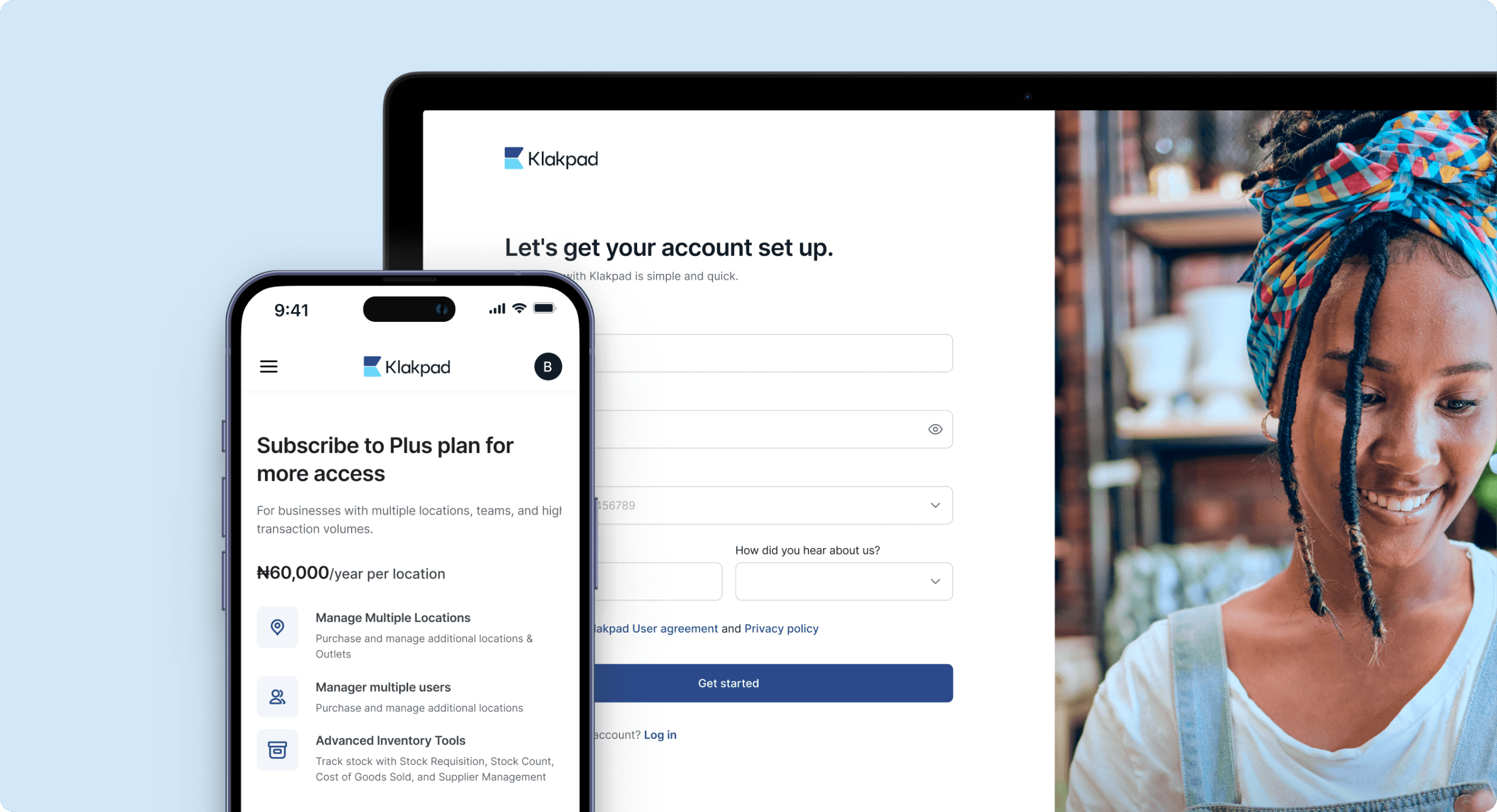
Klakpad Sella is a business management platform that helps SMEs manage sales, inventory, expenses, and other day-to-day business operations from one platform.. New-user onboarding had become a bottleneck: only 44% of users who started sign-up completed account creation and setup. I led the two-week redesign with one other designer, working across problem diagnosis, journey mapping, flow redesign, and UI.
Impact
Sign-up completion increased from 44% to 67%
Estimated time through the flow dropped from 3 min 15 sec to 1 min 20 sec
Customer Success reported fewer onboarding calls and tickets
Old onboarding flow
The problem
We reviewed the existing flow alongside Google Analytics and recurring Customer Success issues.
Analytics showed drop-off throughout onboarding: many users opened sign-up without submitting it, completion remained low among those who started, and the biggest drop-off happened at pricing. Customer Success was also getting repeated questions about getting started and accessing the desktop app.
Mapping these signals back to the journey helped us isolate four problems:
Pricing interrupted sign-up
Users were taken to pricing immediately after clicking “Get Started,” before creating an account or experiencing the product.

Too much to fill at once
Registration asked for too much information upfront, including fields that were not essential to creating an account.

OTP blocked sign-up
Delayed or failed OTP delivery could prevent users from completing registration.

Desktop setup was easy to miss
After registration, users landed on the dashboard. A “Set up your account” prompt directed them to the desktop app, but it did not provide enough guidance for that next step.

Redesigning the onboarding journey
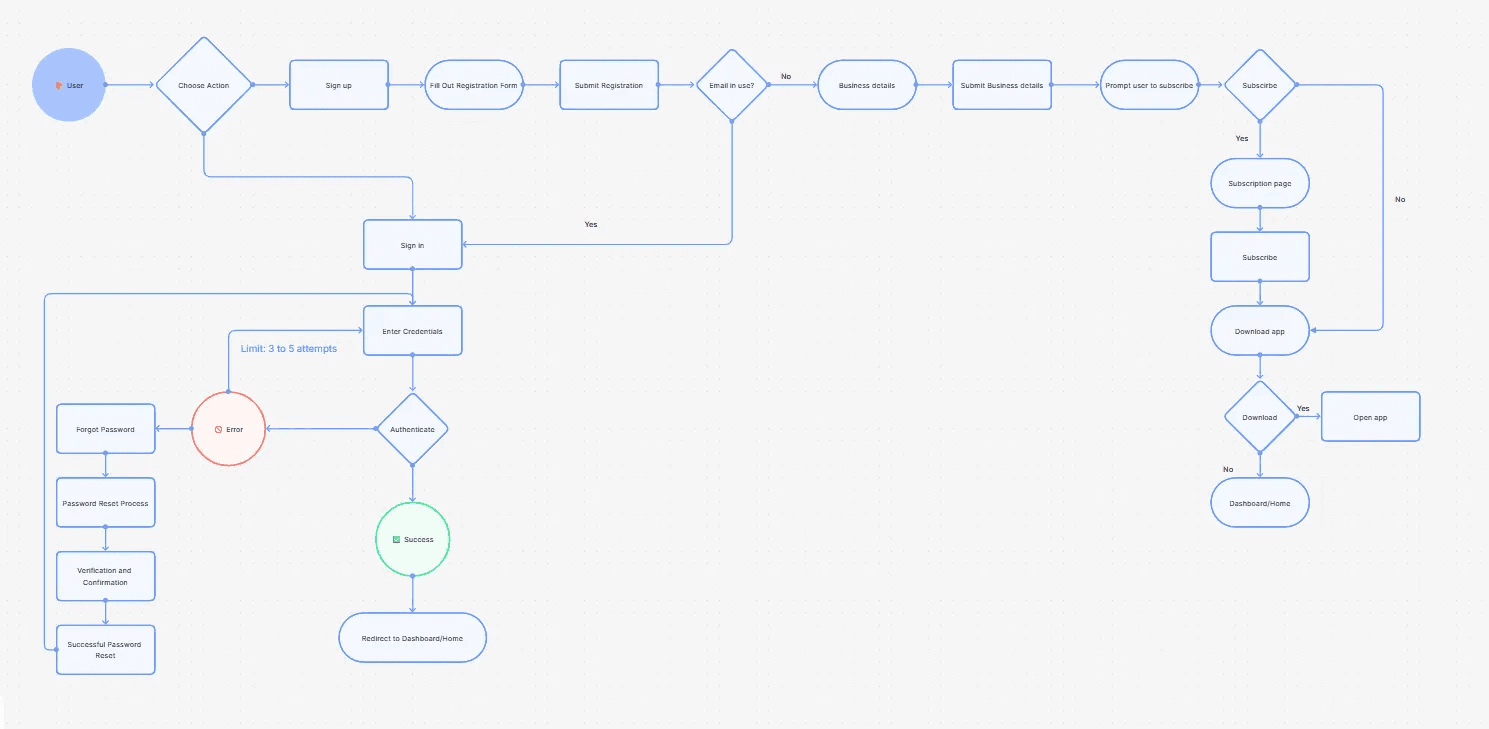
With these findings, we mapped the existing journey and redesigned the flow to make account creation simpler and the path into Klakpad clearer.
Design and engineering worked together throughout, from shaping the sequence to resolving edge cases and technical constraints.
The new flow became:
Sign up → Business setup → Choose free or paid → Subscribe if needed → Desktop setup → Dashboard
Start with only what users need
We reduced the amount of information required at the beginning of sign-up and used progressive disclosure to separate account creation from business setup.

Move the plan decision later
We separated account setup from plan selection. Users could finish setting up their account before deciding whether to subscribe or continue with a free trial account.

Make desktop setup part of onboarding
We added a dedicated desktop setup step before the dashboard, while keeping the existing download prompt in the dashboard as a secondary path.

Reflection
Because the changes shipped together, we could measure the improvement to the overall flow but could not isolate how much each change contributed.
If I were running the project again, I would instrument each step before launch and separate major changes where possible.
I would also extend measurement beyond registration. The next metric I would focus on is first successful action inside the desktop app, followed by whether users still select a plan after pricing was moved later in the journey.
That would show whether higher sign-up completion was also leading to actual product use.